Table of Contents
- Step One: Product Development and Formulation
- Step Two: Ingredient Selection and Procurement
- Step Three: Manufacturing the Finished Product
- Step Four: Quality Testing Throughout Production
- Step Five: Packaging and Labeling
- Step Six: Regulatory Compliance and Documentation
- Why Choosing the Right Manufacturing Partner Matters
- The Importance of an FSSAI Compliant Nutraceutical Manufacturer
- Why Partner with Bactolac Nutraceuticals?
- Conclusion
- FAQs
The production of any nutraceutical product is much more than the blending of various ingredients together. The process of manufacturing each nutraceutical product goes through many well-planned steps such as product development, sourcing of ingredients, manufacturing, quality control, packing, and regulatory compliance. Every step carries significance towards making sure that the final product is up to the mark.
When it comes to dietary supplements, knowledge about the process of dietary supplement manufacturing is essential for choosing the best manufacturer for your brand and making smart business choices. Regardless of whether you are producing your first product or have already expanded your range of products, such information will provide more confidence during the entire production process.
Step One: Product Development and Formulation
Every nutraceutical product begins with an idea.
Certain products hit the market with a particular formulation already in mind, whereas some companies team up with manufacturers to create products according to consumer requirements. In this phase, manufacturers assess the compatibility of ingredients, dosing levels, format, compliance issues, and production feasibility of a product.
The process of formulation ensures that the basis for the production of a good dietary supplement is established in order to facilitate successful dietary supplement manufacturing in terms of quality and compliance.
Step Two: Ingredient Selection and Procurement
The first step to producing high-quality products is to start with good raw materials.
Raw materials are sourced by manufacturers through suppliers while considering various aspects, including their purity, consistency, documentation, and regulatory requirements. All the raw materials have to meet the set standards before being included in the manufacturing process.
Consistency in the sourcing process is necessary to help maintain consistency in product quality while ensuring efficiency and reliability in the manufacturing process.
Step Three: Manufacturing the Finished Product
Once ingredients are approved, the supplement production process moves into manufacturing.
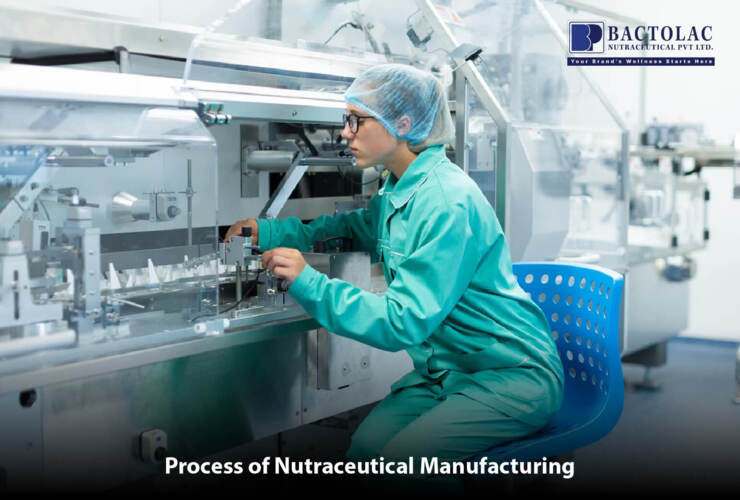
Depending upon the product, it can entail the manufacture of powders, capsules, tablets, and other dosage forms through specialised machinery and processes. In the course of manufacture, close monitoring of processing parameters is carried out to ensure consistency and conformance with set standards for each batch manufactured.
Manufacturing plants have proper procedures for conducting operations that enable the products to maintain their integrity throughout the production process.
Step Four: Quality Testing Throughout Production
Maintaining product quality requires continuous monitoring rather than a single final inspection.
Quality testing for manufacturing starts with the raw materials and is done throughout the production process. Manufacturers undertake different kinds of tests to ascertain that their ingredients, formulations, and finished goods match the required quality parameters.
For different products or depending on regulatory standards, quality testing can involve identity testing, purity testing, microbiology testing, stability testing, physical testing, and other quality tests meant to ensure consistency in manufacture.
Step Five: Packaging and Labeling
After manufacturing and quality approval, products move to packaging and labeling.
The process of packaging serves to protect the supplements during the shipping and handling stages while ensuring their stability is maintained throughout their shelf life. Supplements can be packed into bottles, jars, blister packs, sachets, pouches, stick packs, among others, depending on the type of product.
Moreover, the packaging and labelling of products help to make sure that all the product information, ingredients, instructions on how to use the product, batch details, and regulatory information are correctly included.
Step Six: Regulatory Compliance and Documentation
Compliance plays a central role throughout nutraceutical manufacturing.
Manufacturing companies maintain accurate records of production, quality control, batch traceability, and manufacturing processes for regulatory requirements. Documentation plays an important role in being transparent without compromising on the standards of manufacture.
Collaborating with an FSSAI compliant nutraceutical manufacturer enables the brand to follow the laws and regulations while manufacturing the product to the standards of manufacture.
Why Choosing the Right Manufacturing Partner Matters
Not only does the success of a company that produces supplements depend on the formula used, but also on the manufacturing company’s capabilities.
A well-experienced manufacturer will have the capability of providing expertise, scalability in production, quality control, regulatory knowledge, and other services that ease the process of developing products. The manufacturer would be able to handle all the processes, such as formulation, production, testing, packaging, and documentation, without having to collaborate with various vendors.
Such an arrangement ensures efficiency and allows businesses to focus on marketing and branding.
The Importance of an FSSAI Compliant Nutraceutical Manufacturer
Selection of an FSSAI-compliant nutraceutical manufacturer will give you more assurance that your products have been manufactured following recognised regulatory standards and quality norms.
Compliance will help you adopt good manufacturing practices, proper documentation, a quality management system, and consistency in manufacturing. Compliance will also assist you in establishing credibility among your distributors, retailers, and consumers and help you expand your business in the future.
For supplement companies looking forward to being successful in the future, investing in a legal manufacturing firm should be a major concern.
Why Partner with Bactolac Nutraceuticals?
At Bactolac Nutraceuticals, we provide comprehensive turnkey dietary supplement manufacturing solutions designed to simplify every stage of product development. From formulation and ingredient sourcing to manufacturing, quality testing, packaging and labeling, and regulatory support, every process is managed under one roof by an experienced team. As a FSSAI Compliant Nutraceutical Manufacturer with advanced capabilities across powders, capsules, tablets, sports nutrition, vitamins, herbal supplements, and nutritional products, we help brands develop high-quality nutraceuticals while maintaining strict standards of quality, compliance, and manufacturing excellence.
Conclusion
Nutraceuticals that are successful are designed and developed in a systematic way using a manufacturing process that involves scientific formulation, dependable sourcing, controlled manufacturing, quality testing, legal packaging and labelling, and regulation.
Supplement brands can rest assured that by associating with a seasoned FSSAI Compliant Nutraceutical Manufacturer, they can manage the entire supplement production process, along with providing top-notch supplements according to changing market demands.
FAQs
What is the complete nutraceutical manufacturing process?
The process of nutraceutical manufacturing normally consists of formulation of the product, selection of ingredients, manufacturing, quality check, packing, labelling, regulation and documentation, and finally releasing the product for distribution.
Why is it important to choose an FSSAI-compliant nutraceutical manufacturer?
A FSSAI-compliant nutraceutical manufacturer adheres to the established regulatory guidelines and standards, thereby ensuring that the product is safe and consistent with its documentation and regulatory standards.
What are the key stages of dietary supplement manufacturing?
Formulation Development, Procurement of Ingredients, Manufacturing Process, Quality Control of Manufacturing Process, Finished Product Quality Testing, Packaging & Labelling, and Regulatory Documents are some of the key steps in the process.
How is quality testing performed during supplement production?
The quality testing is performed at various stages of production, from the stage of testing of raw materials to the stage of manufacturing and final product testing, to ensure that there is consistency and quality.
What packaging options are available for nutraceutical products?
Nutraceuticals are offered in various forms of packaging, such as bottles, jars, sachets, stick packs, pouches, blisters, and more, as per the type of product, to maintain the quality of the product along with regulatory aspects.