
Table of Contents
That is usually how it starts. A brand has an idea, a formula, a market it wants to reach, and naturally most of the attention goes there. The product feels like the main thing because it is what people eventually buy. But after looking at how supplement brands grow over time, another thought comes up. A good product still depends on how it is made. That part stays hidden from customers, yet it influences almost everything they experience later.
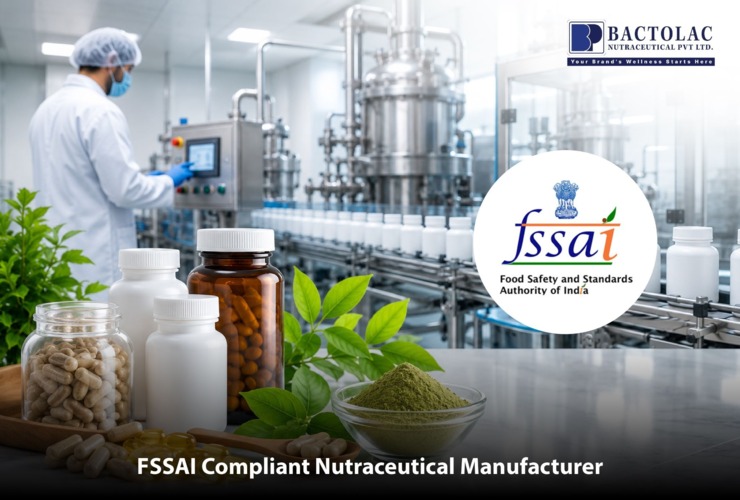
This is where choosing a FSSAI compliant nutraceutical manufacturer starts to matter. Not because it sounds impressive on paper, but because it affects the quality of the product long before it reaches a shelf. The manufacturing side of the business is easy to overlook when everything is going smoothly. It becomes much harder to ignore when quality starts slipping.
What Compliance Really Means In Practice
The word compliance can sound a little dry. Regulations come to mind when the term comes up. It could simply mean that the ingredients are being handled properly. It could simply mean that the manufacturing area is clean. It can mean checking products before they move to the next stage. None of these things sound dramatic, yet together they make a real difference.
That is why food safety compliance is often tied so closely to product consistency. It creates a structure around the manufacturing process instead of leaving important decisions to chance. For a growing brand, consistency is often more valuable than people realize. Customers tend to come back when they know exactly what they are getting each time.
The Manufacturer Behind The Product Matters
Sometimes a manufacturer is viewed simply as the company producing the product. That description is technically correct, but it feels incomplete. The manufacturer eventually becomes connected to the reputation of the brand itself. If products are reliable, customers notice. If problems appear repeatedly, customers notice that too.
Because of that, choosing an FSSAI approved nutraceutical manufacturer is not just a sourcing decision. It is a brand decision. A lot of businesses spend months refining formulations and packaging designs. It makes sense to put the same level of thought into deciding who will actually produce those products. The impact is often larger than expected.
Looking Beyond Cost
It is tempting to compare manufacturers mainly through pricing. That happens in almost every industry. Still, manufacturing partnerships tend to be about more than numbers. Communication matters. Quality systems matter. Reliability matters. A manufacturer that consistently delivers well-made products can save a brand from many future headaches.
That is one reason businesses often look for a reliable manufacturing partner rather than simply the cheapest option available. The right partnership can make growth feel manageable. The wrong one can create problems that keep returning. In many cases, the long-term value becomes clearer than the short-term savings.
Growth Feels Different When The Foundation Is Strong
Many brands focus heavily on launching. That is understandable because launching a product is exciting. The harder part is maintaining quality as the business grows. A product that performs well in its first batch should perform the same way in the tenth or hundredth batch. Customers rarely think about manufacturing processes, but they do notice when products start feeling different.
That is another reason why a health supplement manufacturer should be chosen carefully. Strong systems tend to support long-term consistency, while weak systems often become visible sooner or later. We have seen that brands usually benefit when quality becomes part of the process rather than something checked only after production is complete.
Confidence Comes From The Things Customers Never See
Interestingly, many of the factors that build trust are invisible. Customers do not see production records. They do not see testing procedures. They do not see facility standards. Yet those things influence the product in their hands. That is why food safety compliance matters beyond regulatory requirements. There is the assurance that products are produced in a systematic and responsible manner.
Working with an FSSAI compliant nutraceutical manufacturer will help build such a foundation. Similarly, working with an FSSAI approved nutraceutical manufacturer along with a reliable manufacturing partner will ensure that brands have nothing to worry about while focusing on expansion.
Bactolac Nutraceuticals- What You Should Know
At Bactolac Nutraceuticals, we understand that brands are trusting us with something important when they choose us as their manufacturing partner. We operate as a full-service turnkey contract manufacturer for nutraceuticals and dietary supplements, handling product development, manufacturing, testing, packaging, and labelling under one roof.
What matters to us is creating a process where quality is built in from the beginning rather than checked only at the end. Our facility is being developed according to current Good Manufacturing Practices and industry best practices, with adherence to FSSAI regulations, Indian GMP standards, and WHO guidelines. Alongside this, we hold certifications including Halal, Kosher, ISO, and WHO-GMP. As a health supplement manufacturer, we believe that attention to detail during production often prevents bigger issues later.
Final Thoughts
The more we talk about this, the clearer it becomes that manufacturing is not just another step in the process. It sits underneath everything else. A strong formula, attractive packaging, and a good marketing strategy, all matter. But the product still needs to be produced the right way every single time. That is why choosing the right manufacturing partner deserves careful attention. It may not be the most visible decision a brand makes, but it can easily become one of the most important.
FAQ's
How does FSSAI compliance help build consumer trust?
FSSAI compliance shows products meet recognized safety standards, helping consumers feel more confident about quality, consistency, and reliability.
What food safety standards should health supplement manufacturers follow?
Manufacturers should follow FSSAI regulations, GMP practices, hygiene requirements, testing protocols, and documented quality control procedures consistently.
Why is FSSAI compliance important for nutraceutical brands in India?
It helps brands meet legal requirements, maintain safety standards, strengthen credibility, and build trust with consumers over time.
How does FSSAI approval impact product quality and safety?
FSSAI approval encourages structured manufacturing processes, quality testing, ingredient verification, and stronger product safety throughout production.
How can I verify whether a manufacturer follows FSSAI regulations?
Review certifications, request compliance documentation, assess quality systems, verify registrations, and discuss testing procedures before partnering.